High Performance
DLP® Subsystems
V‑Modules for PLM
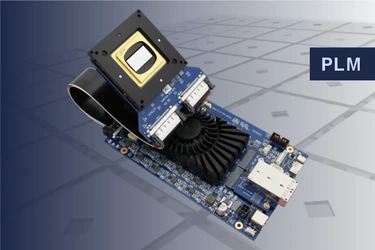
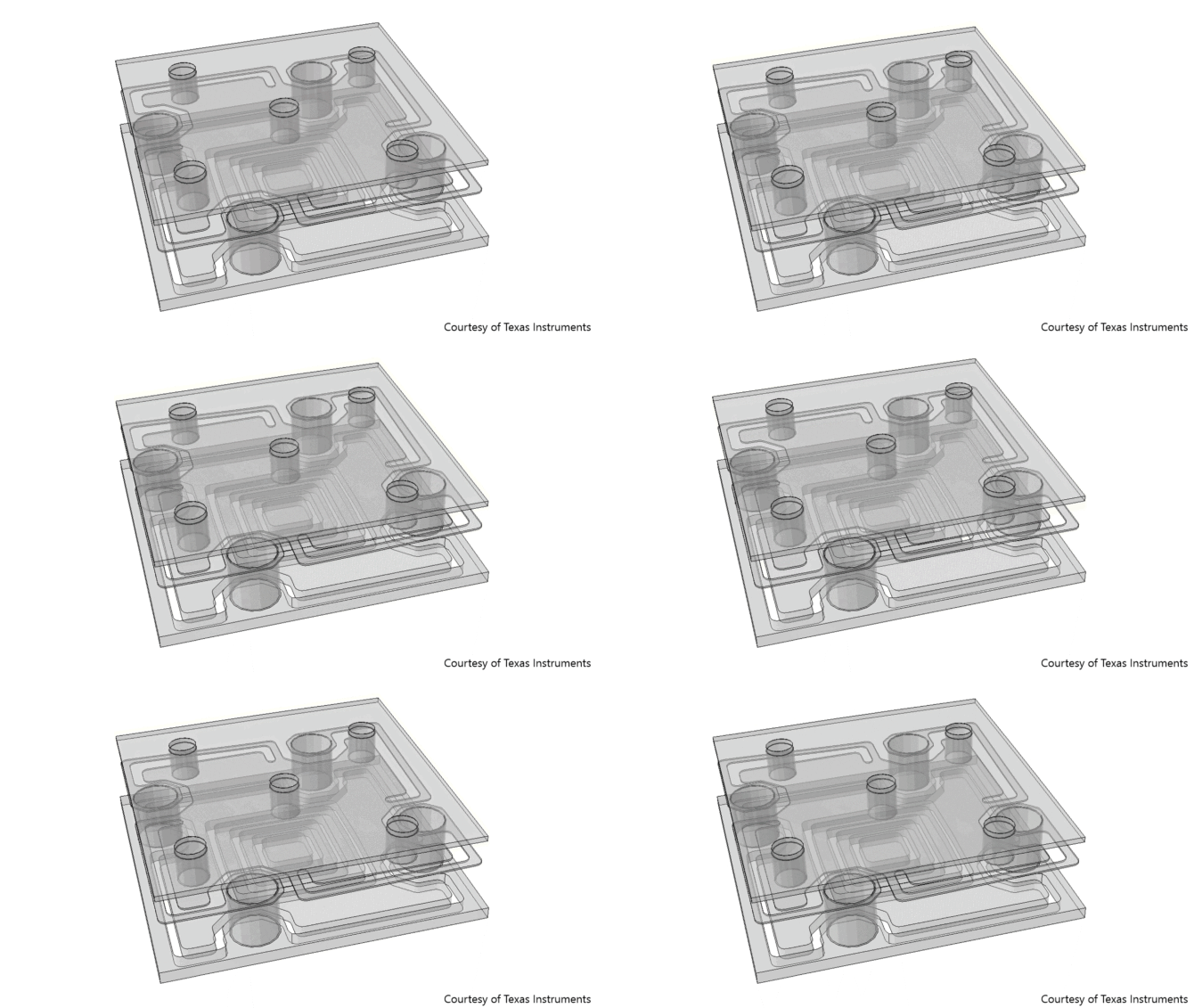
Phase Light Modulators (PLMs) from Texas instruments are MEMS-based phase-only spatial light modulators (SLMs). Unlike conventional micromirrors, PLM mirrors move in a controlled vertical displacement, often referred to as piston motion, introducing a precise phase shift in the reflected wavefront. By locally adjusting the phase, the reflected light can be modulated to interfere constructively or destructively in the target plane, thereby generating the desired intensity distribution.
In contrast to traditional DLP®systems, PLMs largely preserve the incident light intensity, as phase modulation redistributes optical energy through interference instead of blocking it. This enables exceptionally high optical efficiency.
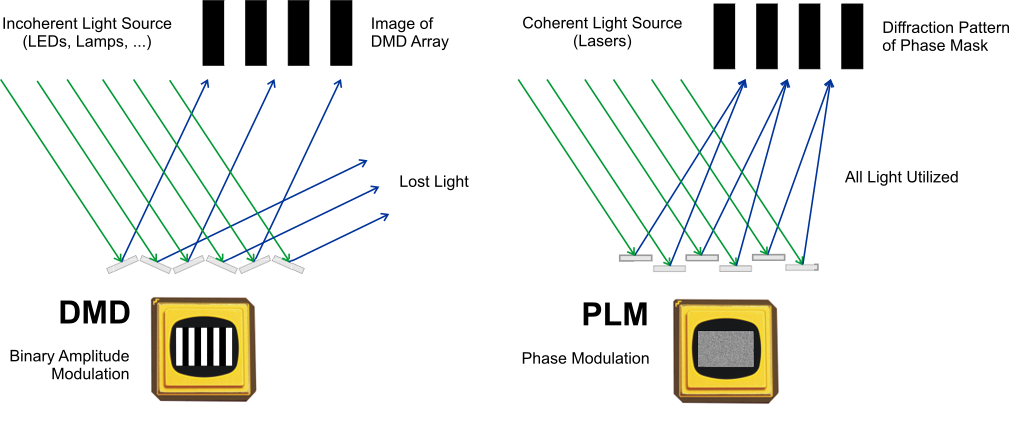
While traditional DMDs can project images directly from digital patters through binary amplitude modulation, PLMs require computer-generated holograms (CGH) that defines the phase mask across the mirror array. Conventional DLP®systems operate effectively with incoherent light sources such as LEDs or lamps because image formation does not depend on phase relationships. In contrast, PLM technology relies on controlled interference and therefore requires coherent illumination, typically provided by a laser source.
In summary, whereas traditional DLP® technology is based on binary amplitude modulation, the PLM platform is designed for ultra high-speed phase modulation, extending MEMS micromirror technology into applications such as beam steering, adaptive optics, and holographic light shaping.
Comparison with Liquid Crystal SLMs
Conventional phase-only SLMs are based on liquid crystal on Silicon (LCoS) technology, where phase is modulated by electrically changing the refractive index of a liquid crystal layer. While LCoS devices are widely adopted, their performance is inherently limited by the relatively slow switching speeds, polarization sensitivity and temperature-dependent behavior. In contrast, MEMS-based PLMs offer faster response times, polarization-independent operation, improved thermal robustness, and higher optical efficiency.Feature | PLM | LCoS SLM |
Modulation Principle | MEMS-based displacement of micromirror | Refractive index changes of liquid crystal |
Polarization Dependence | Polarization-independent | Requires s- or p-polarization |
Switching Speed | Up to 5 kHz | < 1kHz |
Thermal Stability | High | Sensitive to temperature |
V‑Modules from ViALUX
The V‑9903P, based on the UltraSpeed V‑Module platform from ViALUX, represents the highest performance PLM module available on the market. The functional scope of this PLM module and its universal API extend well beyond the capabilities of evaluation modules from Texas Instruments allowing for extremely short development times and provide a state-of-the-art solution for demanding applications.
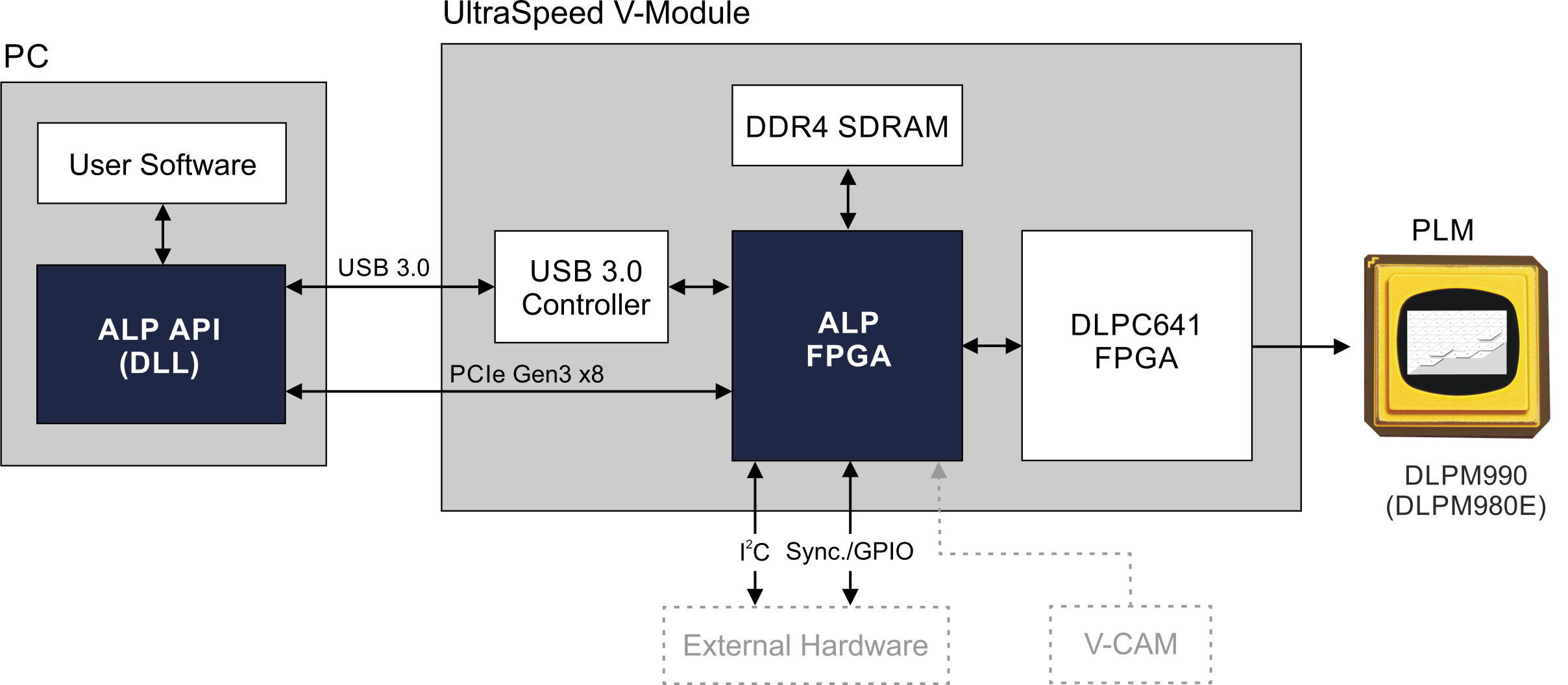
UltraSpeed V‑Modules from ViALUX are proven in industrial use and are designed for maximum performance and reliability, offering a highly advanced platform for integrating the most powerful PLM controller chipset from the Texas Instruments. With on-board memory based on SDRAM technology V-Modules offer lower latency, and superior real-time data access, ensuring continuous, high-speed data flow to the PLM.
Whether for industrial, medical or scientific applications, they provide the ultimate solution for ultra-fast phase upload and real-time streaming.
UltraSpeed V‑Modules are powered by the trusted ALP Controller Suite, which offers a versatile Application Programming Interface (API) designed for flexible control and customization.